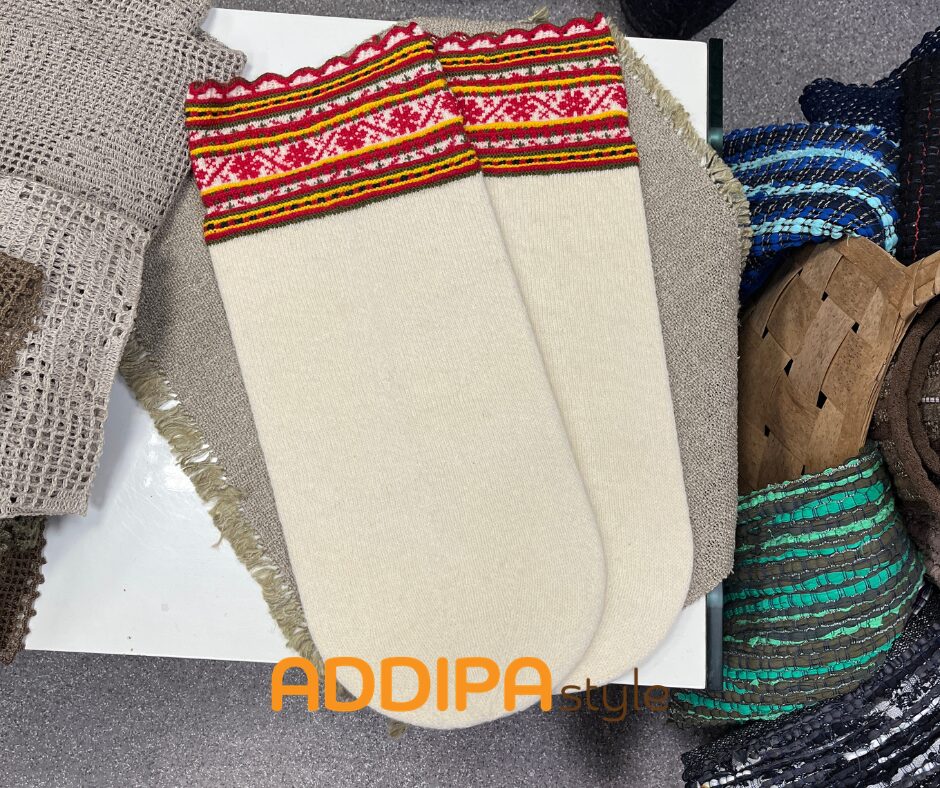
Two Years for One Pair: My Journey Knitting "Sack Socks"
Have you ever started a project thinking, "This will be a simple task," only to find yourself two years later with a completely new set of skills? That is exactly the story of my "kulīšu zeķes" (traditional Latvian sack-like socks).
It all began about four years ago at the Folk Applied Art Studio (TLMS) "Liepava." Thanks to the master craftswoman Sandra Brūne, I attended my first mitten-knitting masterclass and realized how little I actually knew about this ancient craft. But the real challenge was still to come.
What Exactly Are "Kulīšu Zeķes"?
When the suggestion to knit these socks first came up at the studio, my first question was: "What on earth are they?"
As it turns out, these are historical socks worn in ancient times when modern footwear didn't exist. Their "secret" lies in their size and how they were worn:
First, you would wrap your feet in footwraps (auti).
Then, you’d pull on these massive sack socks (kulīšu zeķes).
Finally, you’d step into leather pastalas or bast shoes (vīzes).
This is why they are unusually wide and large—they had to provide warmth over a foot already bundled in several layers.
160 Stitches and a Lesson in Perfectionism
The knitting process was no walk in the park. If anyone thinks knitting a sock is easy, try this:
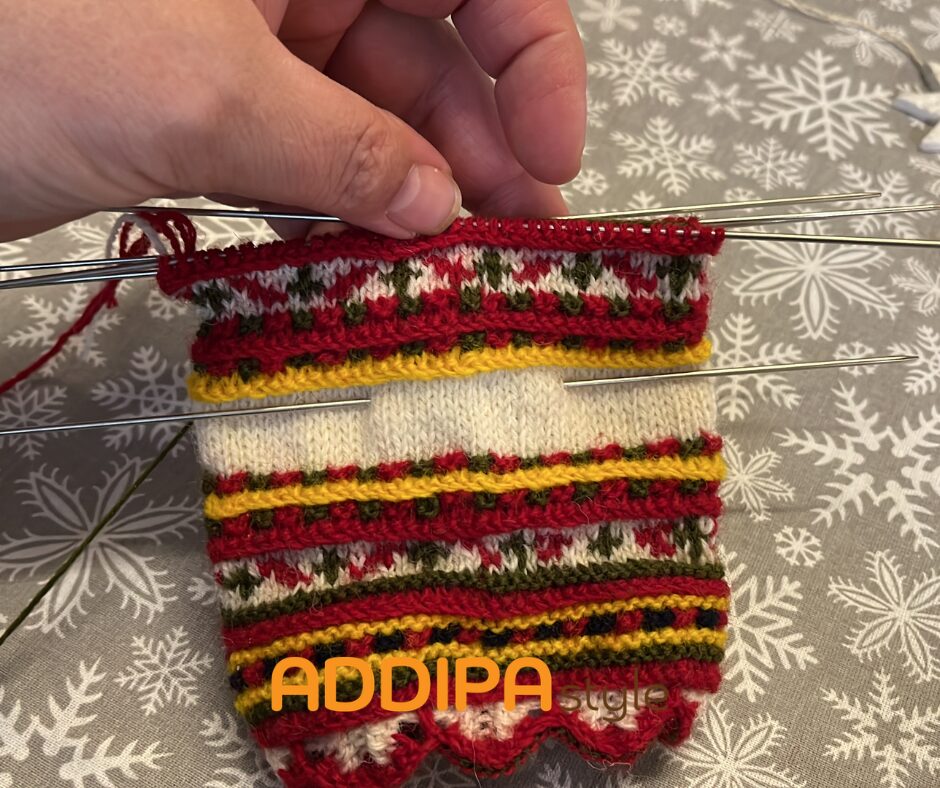
The Scale: A single sock required 160 stitches per round.
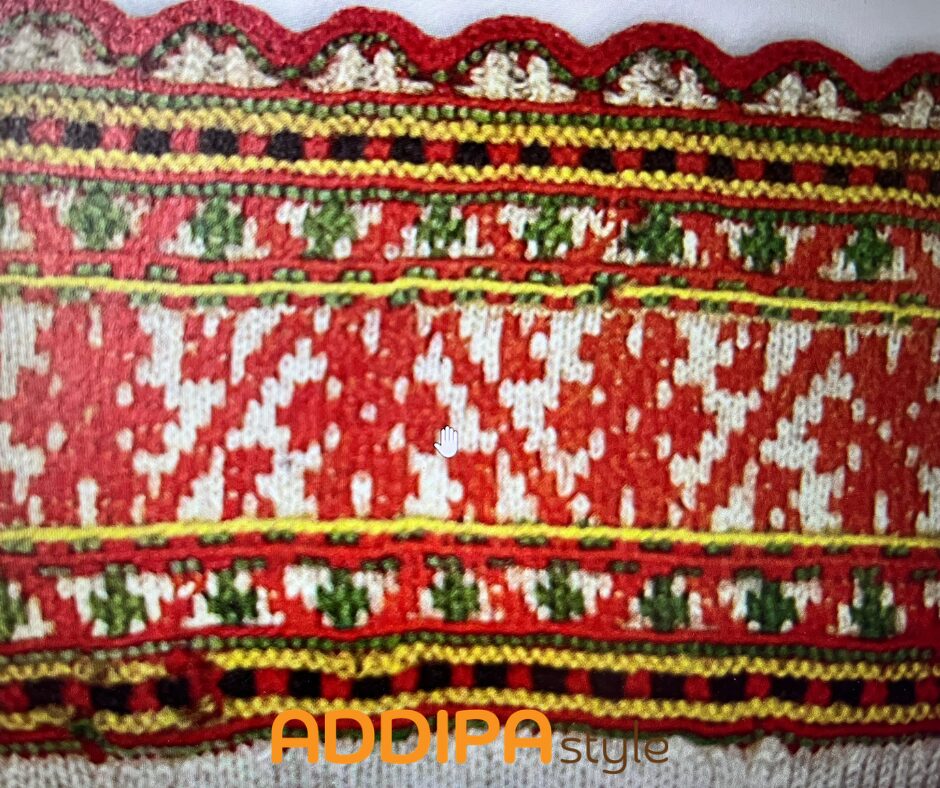
Technique: I had to learn the traditional Rucava scalloped edges (robiņi) and intricate, colorful striped patterns.
The Embroidery: The central red pattern is actually embroidered. This was the biggest hurdle—it had to look perfect on both the outside and the inside.
Patience: I "frogged" (unraveled) and re-knitted the white section three times. Why? Because my impatience and incorrect proportions kept me from reaching the result I envisioned.
Altogether, this journey—from the first color sketch to the very last stitch—took two years.
Ancient Traditions Meet the 21st Century
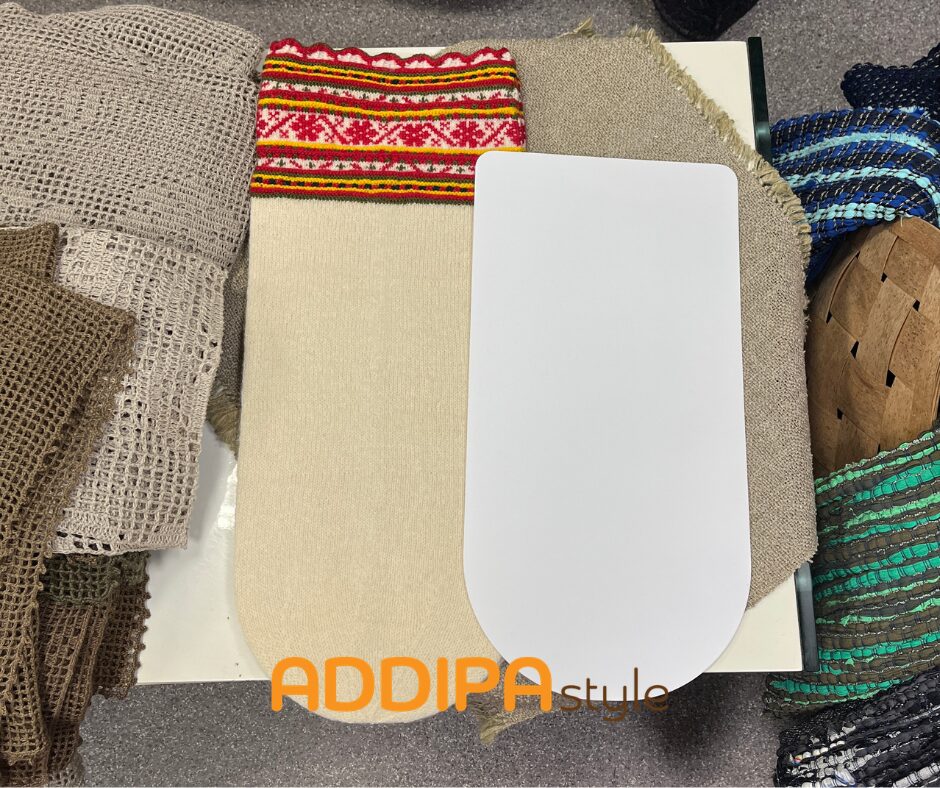
Once the socks were finally finished, they needed to be washed and blocked to achieve their true shape. This is where my husband, Māris from 3dprintslv, stepped in. He modeled and 3D-printed custom sock blockers specifically for this project. By pulling the wet socks over these forms, they dried in a perfect, professional shape.
The Lesson: Even the oldest traditions can benefit from a little 21st-century engineering!
A Heartfelt Thank You
None of this would have been possible without my mentors, Sandra Brūne and Smaida Rubeze. Their advice and the support from the ladies at TLMS "Liepava" were the driving forces that kept me from giving up after unraveling that white yarn for the third time.
Looking at the final result now, I feel an immense sense of pride. These socks aren't just a piece of clothing—they are the embodiment of patience, history, and a true love for the craft.
Have you ever had a craft project that took way longer than expected? I’d love to hear your stories in the comments!
#kristinebumbule #tlmsliepava #3dprintslv #kulisuzekes